Does PRP Work for Joint Pain? An Orlando Physician’s Honest Evidence Review
When patients come to Dr. J Anti-Aging Clinic, they’ve usually tried something already anti-inflammatories, cortisone shots, physical therapy. Sometimes those things help for a while and then stop working. Sometimes they never worked well. What they’re looking for is something that actually addresses the problem, not just masks it for a few months.
PRP platelet-rich plasma is one of the most studied regenerative approaches for joint pain, and the evidence has matured significantly over the last several years. I want to give you an honest picture of what it shows: what works, what the limitations are, and where I think PRP fits in a thoughtful treatment plan.
I’m Dr. J an ABIM board-certified internal medicine physician with over 25 years of clinical practice in Central Florida. I founded Dr. J Anti-Aging Clinic because joint pain deserves regenerative medicine, not just pain management.
What Is PRP and How Does It Work in Joints?
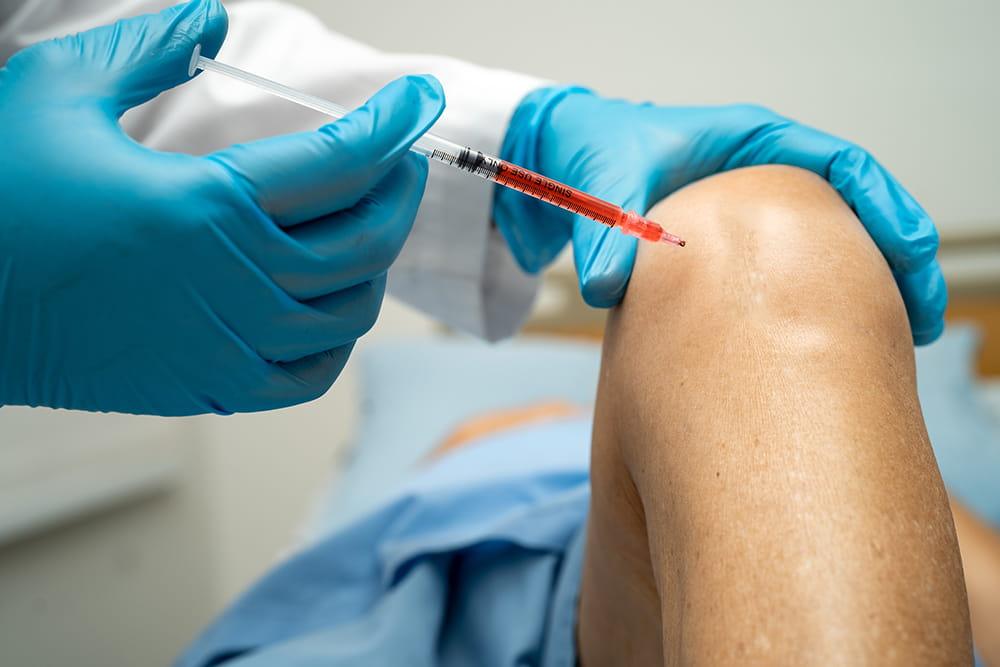
PRP stands for platelet-rich plasma. A blood draw the same as any routine lab is centrifuged to concentrate the platelet layer. Platelets contain hundreds of growth factors: PDGF, VEGF, TGF-β, IGF-1, FGF, and others. When injected into a joint, these growth factors do several things simultaneously:
- Anti-inflammatory signaling: PRP modulates the inflammatory cytokine environment in the joint, reducing the chronic low-grade inflammation that drives osteoarthritis pain and progression
- Cartilage support: PRP growth factors stimulate chondrocyte (cartilage cell) activity, supporting the production of collagen and proteoglycans that maintain cartilage integrity
- Synovial fluid improvement: PRP improves the quality of synovial fluid the joint’s natural lubrication by stimulating hyaluronic acid production from synoviocytes
- Tissue regeneration: growth factors support repair of soft tissue structures (ligaments, tendons) that contribute to joint stability
This is not theory it’s the mechanism that has been studied across hundreds of clinical trials in orthopedic medicine. The same growth factor biology underpins PRP’s use in sports medicine for ligament injuries, in orthopedic surgery for bone healing, and in wound care.
What the Clinical Evidence Shows
Mayo Clinic / Hospital for Special Surgery Meta-Analysis (2024)
A 2024 meta-analysis from researchers at Mayo Clinic and the Hospital for Special Surgery (PMID: 38420745, Oeding et al.) analyzed all randomized controlled trials comparing PRP with alternative non-operative treatments for knee osteoarthritis 1,993 patients across multiple studies. Key findings:
- PRP demonstrated significantly higher rates of successful outcomes compared to hyaluronic acid (odds ratio 2.19, p=0.002)
- PRP showed higher rates of patient-reported symptom relief compared to all alternative non-operative treatments (p=0.019)
- PRP patients required significantly less reintervention after initial treatment (p=0.002)
- PRP patients more frequently achieved the minimal clinically important difference (MCID) for pain improvement (odds ratio 6.19)
The MCID finding is particularly important. Achieving the minimal clinically important difference means the improvement is enough that patients actually notice it in their daily life not just a statistically detectable change on a scale. An odds ratio of 6.19 for achieving that threshold is a clinically meaningful number.
Platelet Concentration Matters
A 2025 meta-analysis (PMC11874499) specifically evaluated whether platelet concentration affects outcomes in knee osteoarthritis PRP treatment. The finding: yes, significantly. Higher platelet concentrations produce greater and more consistent improvement. This is one reason why protocol matters a low-platelet PRP preparation will underperform a high-concentration one. At Dr. J Anti-Aging Clinic, we use an optimized centrifugation protocol specifically to achieve consistent high-platelet yield.
| 2.19× |
| PRP vs. Hyaluronic Acid, Odds Ratio for Successful Outcomes |
| Oeding et al. 2024, Mayo Clinic / HSS, PMID 38420745 1,993 patients |
| HONEST EVIDENCE NOTE |
| Not all studies agree. Some systematic reviews find that PRP is not significantly superior to hyaluronic acid at short-term follow-up (1–6 months), with benefits more pronounced at 12 months and beyond. Study heterogeneity differences in PRP preparation, injection frequency, and patient populations makes cross-study comparison difficult. PRP is not FDA-approved as a disease-modifying treatment for osteoarthritis. It is an evidence-informed regenerative option that works best for the right patient, with the right protocol, at the right stage of joint disease. I discuss this openly with every Dr. J Anti-Aging Clinic’s patient. |
What Joints Can PRP Treat?
PRP injection is applicable across multiple joints. At Dr. J Anti-Aging Clinic, we treat:
- Knee: The most extensively studied joint for PRP; knee osteoarthritis, meniscus-related pain, ligament support
- Hip: Hip osteoarthritis, labral irritation, bursitis-related pain
- Shoulder: Rotator cuff tendinopathy, glenohumeral osteoarthritis, AC joint pain
- Ankle: Ankle osteoarthritis, Achilles tendinopathy, ligament-related instability pain
- Spine: Facet joint injections, sacroiliac joint pain, paraspinal ligament involvement
- Small joints: Fingers, wrists, thumb CMC joint particularly relevant for inflammatory arthritis and post-traumatic joint changes
Who Is the Right Candidate?
- Moderate to severe joint pain with confirmed osteoarthritis: Particularly where conventional treatments (NSAIDs, cortisone) have provided inadequate or short-lived relief
- Patients wanting to delay or avoid joint replacement surgery: PRP is not a replacement for surgery in end-stage joint disease, but it can meaningfully extend time to surgery and quality of life in moderate OA
- Active adults with sports-related joint degeneration: Runners, cyclists, weekend athletes with knee or hip OA benefit from regenerative approaches that don’t just mask activity
- Patients who cannot tolerate NSAIDs long-term: GI issues, cardiovascular risk factors, kidney function concerns
- Post-surgical patients: PRP can support recovery after arthroscopic procedures
Frequently Asked Questions
How long does PRP joint injection pain relief last?
Results vary. Most patients notice improvement within 4 to 8 weeks after injection as the regenerative process develops. In many cases, benefits continue to build at 3, 6, and 12 months. Studies show that PRP’s advantages over hyaluronic acid become more pronounced at the 12-month mark suggesting the regenerative mechanism has a longer duration of effect than simple lubrication therapy.
Is PRP joint injection painful?
We use precise ultrasound or fluoroscopic guidance to place injections accurately with minimal tissue trauma. Most patients describe pressure rather than sharp pain. A numbing agent is applied before injection. Post-injection soreness for 24 to 72 hours is common as the growth factor response initiates this is actually a sign of biological activity, not damage.
How many PRP joint injections do I need?
For most patients, we recommend an initial series of 1 to 3 injections, spaced 2 to 4 weeks apart, then reassess. Some joints respond well to a single injection; others benefit from a series. We assess response and adjust. Maintenance injections annually or biannually help sustain results in progressive conditions like osteoarthritis.
Is PRP covered by insurance for joint pain?
PRP joint injections are currently classified as experimental by most insurance carriers and are not typically covered. We discuss pricing and financing options at your Dr. J Anti-Aging Clinic consultation.
| Dr. J Anti-Aging Clinic by Dr. J in 7300 Sand Lake Commons Blvd Ste 227 L, Orlando, FL 32819 |
| ABIM Board-Certified | 25+ Years Experience | 1,000+ Five-Star Reviews |
| Call (407) 972-1197 or book at drjantiagingclinic.com |